
New Acropolis presents itself in very bright, positive, and appealing terms. How could it be otherwise? This is its facade — the image of a “clean-cut,” society-friendly organization. Much is said about respect (10 times on the page "What is New Acropolis?"), philosophy (15 times), and social engagement (17 times), as well as values, ideals, culture, volunteering. But what does New Acropolis keep quiet about?


✅ Indeed, in New Acropolis they do volunteering, they do good deeds.
⚠️ However, volunteering is not an end in itself.
- They use volunteering as a tool for attracting new members and strengthening their community.
- It is not just altruistic activity for the benefit of other people. At the core lies an ideological motivation, a striving for personal development, which is part of their philosophy, or more precisely, their faith. Through volunteering acropolitans elevate themselves above other people and become closer to the New People who will come when the time comes for the sixth sub-race of the fifth race according to acropolitan beliefs, which they conceal from the uninitiated.
There is an opinion “if an organization does good deeds, then it cannot be bad.” But this is not logical; anyone can engage in volunteering, and volunteering cannot be a justification, and acropolitans very often use volunteering as a justification.
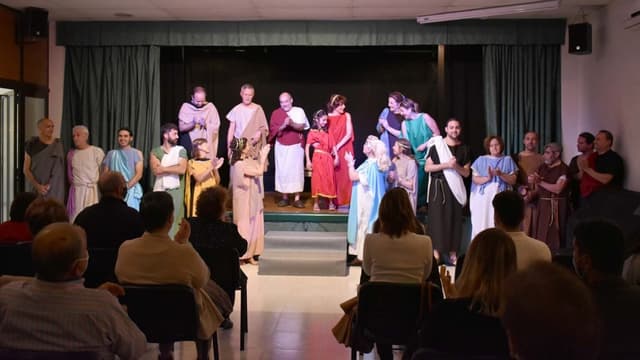
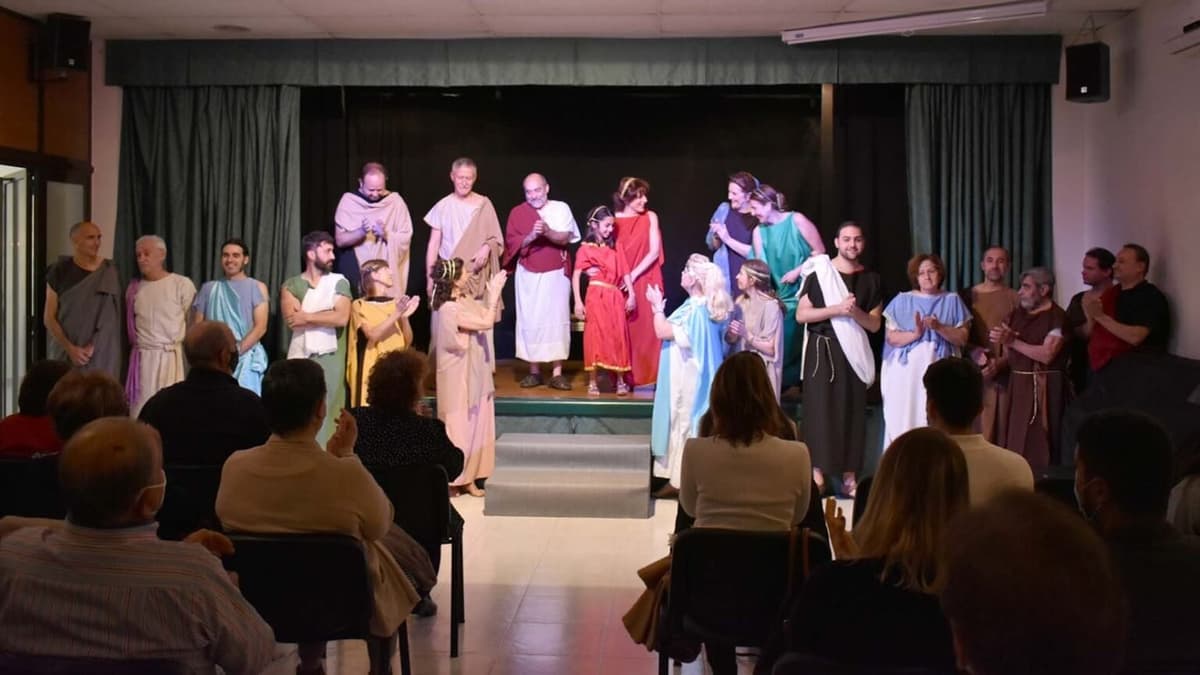
✅ Indeed, New Acropolis holds cultural events and activities, which is great.
⚠️ But, as with volunteering, culture here is often not an end in itself. It works as a tool of “soft entry” and as a wrapper for ideological messages: to form loyalty, create a positive image, reinforce the role of the “school” and the “Teacher”, and attract new people through pleasant, aesthetic events.
Example. On the official website of New Acropolis there is an article about a performance organized by acropolitans, in which you can read:
We learned about two amazing women: deaf and blind Helen Keller, and Anne Sullivan, a talented teacher. After many attempts the teacher managed to return to the student the ability to communicate with the outside world.
...
This story became a good illustration of one of the principles of the philosophical school of New Acropolis: the unfolding of inner potentials.
⚠️ At first glance, this is just an inspiring story about support and teaching. But in their presentation it is used as an allegory of a key ideological motive: a person without a "Teacher" — as if blind and deaf; and the "unfolding of potentials" is possible only through the right guidance and submission to that guidance. (see authoritarian structure), (see disdain for non-acropolisians and inactive acropolitans)
The problem is not in culture itself and not in the fact that learning can help. The problem is when a cultural narrative is re-signified to reinforce an authoritarian narrative:
- The "Teacher" becomes not a specialist/educator, but a figure whom it is "right" to obey.
- "Inner potentials" are presented as something that unfolds only within the confines of the school/ideology.
- The outside world implicitly appears as "incomplete", "dark" or "unawakened" without this path.
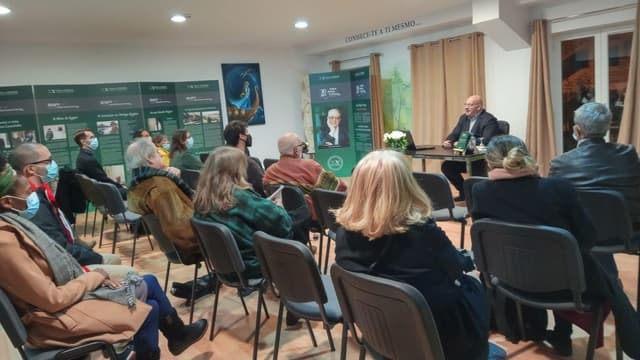
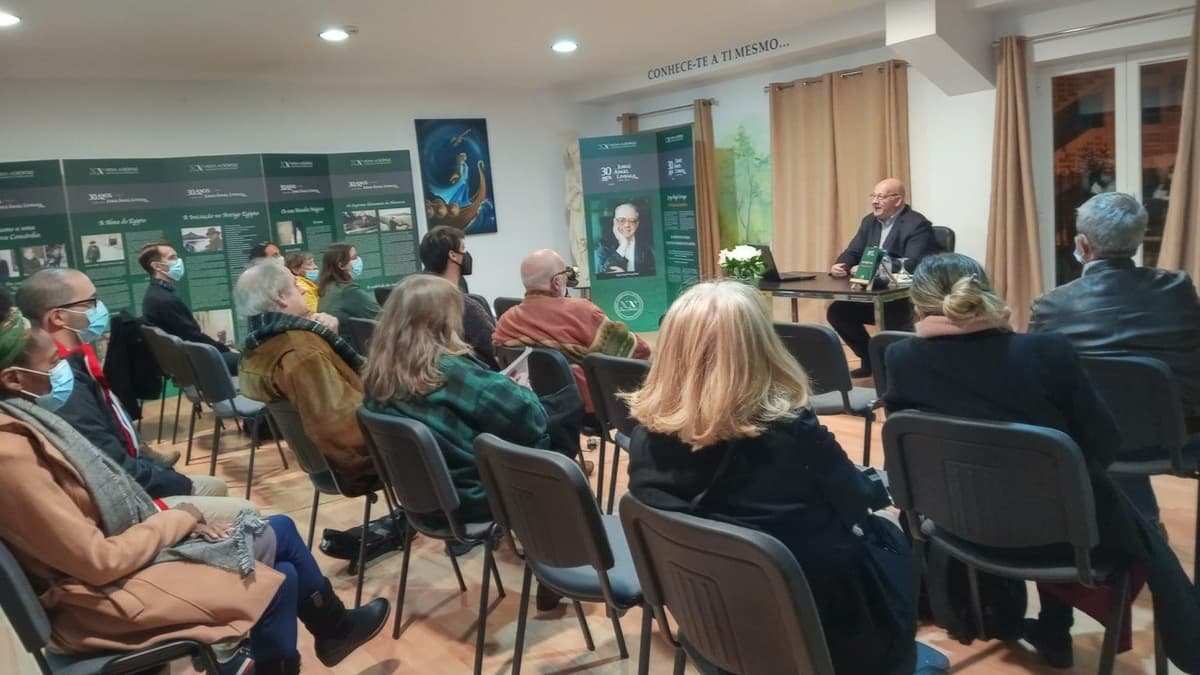
✅ Indeed, New Acropolis provides a concise exposition of some philosophers and their ideas; it raises philosophical questions.
⚠️ But, all modern philosophical schools are ignored. They interpret ancient philosophers in a specific, non-academic, ideologically biased key that confirms the teachings of Blavatsky and the Theosophical Society. New Acropolis gives answers to philosophical questions, but these are ready-made answers that must be accepted on faith. In New Acropolis it is not about independently building a worldview, about independent thinking, only clearly defined teaching by the Teachers in preordained "truths" propagated by Blavatsky and JAL.
On the official website of New Acropolis one can read:
To encourage love for wisdom through the comparative study of philosophies, religions, sciences and arts, so as to achieve knowledge of man, nature and the universe.
For acropolitans, comparative study consists in following a predetermined methodology, predetermined points of view, and then this is no eclecticism, but syncretism. There is only one single way to look at everything — the "correct" acropolitan way; all others are mistaken and possess only a fragment of the truth. (see intolerance)
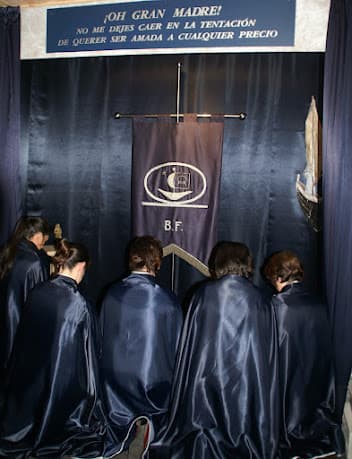
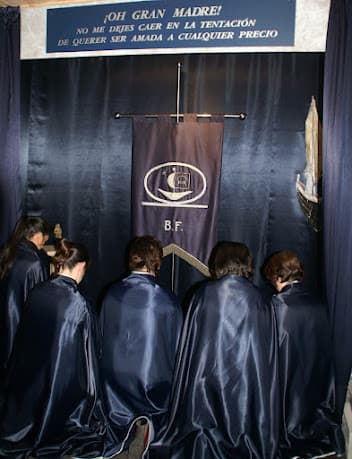
Members of New Acropolis conceal their religiosity and do not want to acknowledge it.
⚠️ But:
- In almost every branch of New Acropolis there is a Temple with artifacts and portraits important to acropolitans — this is a special, separate, hidden room.
- New Acropolis has its own special holidays with sacred meaning.
- The attitude of acropolitans toward their "Teacher" (Jorge Ángel Livraga, and after his death — Delia) — this is not academic respect, but religious worship.
- Theology: the existence of a Great White Hierarchy of superhuman "Teachers" and its opposing Black hierarchy of "dark forces".
- Jorge Ángel Livraga — is “a semi-divine being, one of those figures who, thanks to his spiritual development, has attained eternal truths.” Source: testimony
- Cosmology: the theosophical doctrine of races — the present humanity is preparing for the arrival of the “sixth sub-race”, and the Acropolis is the guide of this process.
- Reincarnation: members of the organization are an “elect family” of souls that reincarnates together through millennia.
- Mysteries and initiation: the organization directly calls itself a “School of Mysteries” with the gradual unfolding of secret doctrine.
See more about the religiosity of acropolitans.
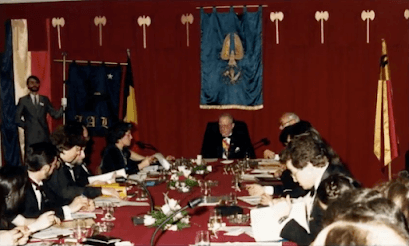
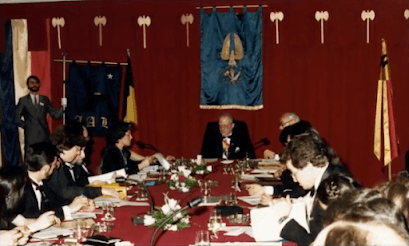
Psychic destructiveness:
- dependence on New Acropolis after psychological manipulations, such as "love bombing", personal conversations, reminders, artificial "friendship"
Moral destructiveness:
- disdain for non-acropolitans and inactive acropolitans
- encouragement of active members of New Acropolis to manipulate students
5.1. New Acropolis isolates a person from society and loved ones.
He understood that attending New Acropolis was more important than spending time with friends and family, and he was taught that for a "developed being" it is right to do what they do not want to do, "for the sake of the common good." Source: Testimony of a former member of New Acropolis
In New Acropolis they started to speak badly about my friends, they said that they are all strange, that I am always somehow absent... They consider me almost a traitor for having friends abroad. Source: Testimony of a former member of New Acropolis
In one of Livraga’s texts they ask: “Start breaking the unnecessary chains with friends who do not share your ideal, although they know about it, and with every person, whoever they may be, who opposes your present spiritual vision, because maintaining these old relationships will harm you and those people who have not yet awakened as philosophers; who would be ashamed of you or mock what you consider the holiest: your acropolitan ideal” Source: Internal materials of New Acropolis. Recommendations for members. Jorge Ángel Livraga
“We must ensure that ties with dissidents are not maintained for sentimental reasons, because if, while inside, they did not fulfill their obligations, it is easy to conclude that they do not understand and do not love ‘New Acropolis’. To keep them in a positive and friendly light is an invitation for others to follow in their footsteps” Source: Jorge Ángel Livraga “Leader’s Manual”
5.2. Authoritarianism — prohibition of criticism, obedience without doubt
New Acropolis has a rigid hierarchical structure, where obedience is the norm, and criticism of leaders is a statutory violation:
Refrain from any criticism regarding leaders, teachers and fellow students. This applies to leaders in all cases; to fellow students — only in personal matters.
— Regulations for members. Article No. 10. Jorge Ángel Livraga
(More: the authoritarian structure of New Acropolis)
5.3. Stigmatization of doubts
Negative attitude toward those who doubt. Shaming a person for doubts.
They limit your rationality and make it clear that questioning anything is wrong.
— Testimony of a former member of New Acropolis (source)
5.4. Rejection of rational analysis
Rejection of rational analysis and critical thinking. Rejection of logic and evidence.
Dialogue with kama-manas is not befitting ladies and gentlemen.
— Decree No. 59. It is very important to maintain cohesion. Jorge Ángel Livraga (source)


